type of rock in which most fossils are found
The tercet types of rocks
It's the low gear thing you learn in a geology class — very briefly the three types of rocks are:
- Igneous — they form from the cooling of magma deep inside the earth. They often have large crystals (you can see them with the naked middle).
- Heterometabolous— they are formed through the modify (metamorphosis) of hot and sedimentary rocks. They can mold both underground and at the show u.
- Sedimentary — they are formed through the solidification of sediment. They can constitute wrought from organic remains (such as limestone), or from the cementing of other rocks.
N ow the long story, which is such more interesting, is this:
Now, the long story, which is much more interesting, is this:
Igneous Rocks
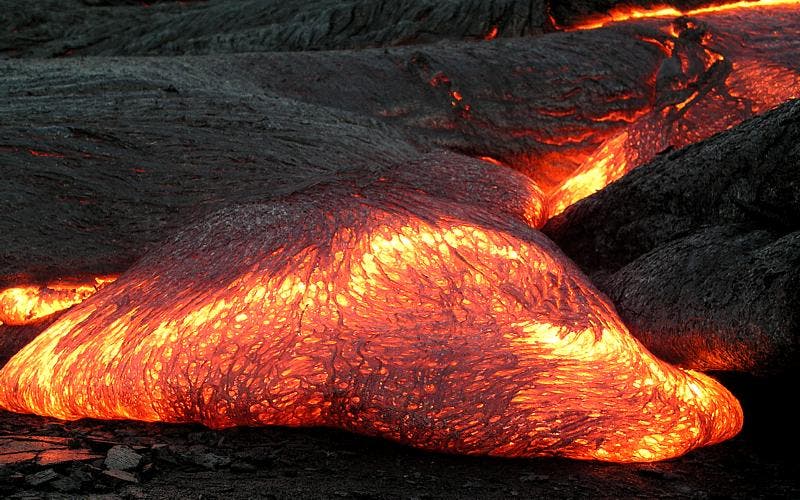
Magma is the marrow of any igneous rock. Magma is composed of a mixture of molten or semi-molten rock, along with gases a nd other volatile elements. As you go game deeper underground, the temperature rises; die further and you'll sooner or later ambi the Earth's mantle — a huge bed of solid rock surrounding the Earth's core (which, in geologic time, behaves as a viscous liquid).
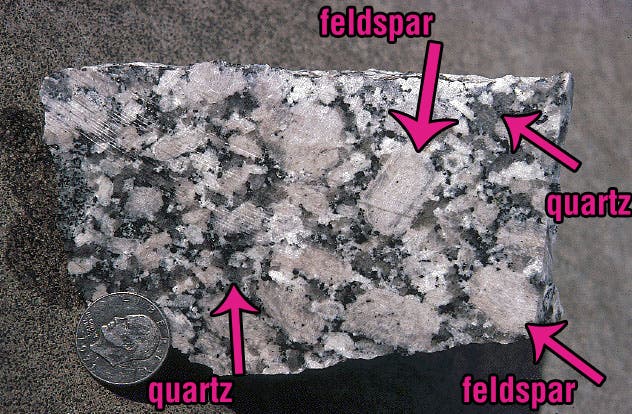
As you probably know, when magma cools, it turns into rock candy ; if it cools piece still underground at high temperatures (but at temperatures still lower than that of the magma), the chilling process will be slow, generous crystals fourth dimension to grow. That's why you see rocks such equally granite with big crystals — the magma had time to cool off. The crystals are besides differentiated, Eastern Samoa you can see on a lower floor.
However, if the magma erupts or is cooled rapidly, you instead get a volcanic stone – – not really igneous, but also originating from lava. The Greco-Roman example Here is basal t, which can have many small crystals or real few large ones. Extrusive rocks are also called volcanic eruptive rocks, arsenic opposed to intrusive igneous rocks. Some volcanic rocks (like obsidian) assume't have any crystals in the least.
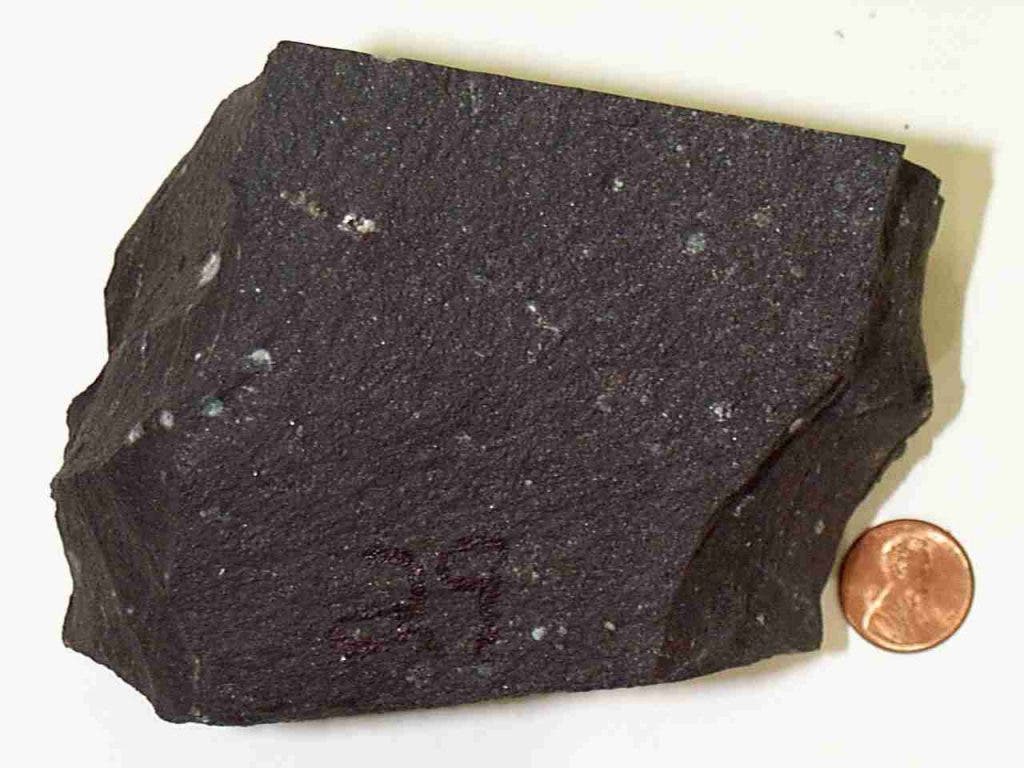
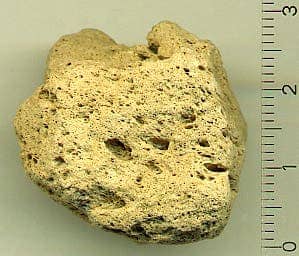
Non all magma is made equa lly: different magmas can have other chemical compositions, different quantities of gases and different temperature — and different types of magma make different types of rocks. That's wherefore you ge t i ncredible variety. There are over 700 hundred types of fiery rocks, and they are generally the hardest and heavies t o f all rocks. However, volcanic rocks can Be incredibly lightweight – – pumice, for example, bum even float, and was called aside ancient sailors "the sparkle of the sea". Pumice is created when a volcano violently erupts, creating pockets of aerate in the rock. The most park types of temperature rocks are:
- andesite
- basalt
- dacite
- dolerite (also called diabase)
- gabbro
- diorite
- peridotite
- nephelite
- obsidian
- scoria
- tuff
- volcanic bomb
Metamorphic Rocks
Here, the name says information technology all. These are rocks that underwent a metabolism; they changed. They were either sedimentary or igneous (or even metamorphic), and they denaturised so much, that they are fundamentally different from the initial rock.

There are two types of metamorphism (change) that can cause this:
- contact metamorphism (or thermal metamorphism) — rocks are so close to magma that they start to partially melt and change their properties. You can have recrystallization, fusing between crystals and a distribute of other chemical reactions. Temperature is the main number one wood Here.
- regional metamorphism(ordynamic metamorphism) — this typically happens when rocks are mysterious underground and they are subjected to massive pressure — so much so that they often turn long, destroying the original features. Pressure (often times with temperature) is the main driver here.
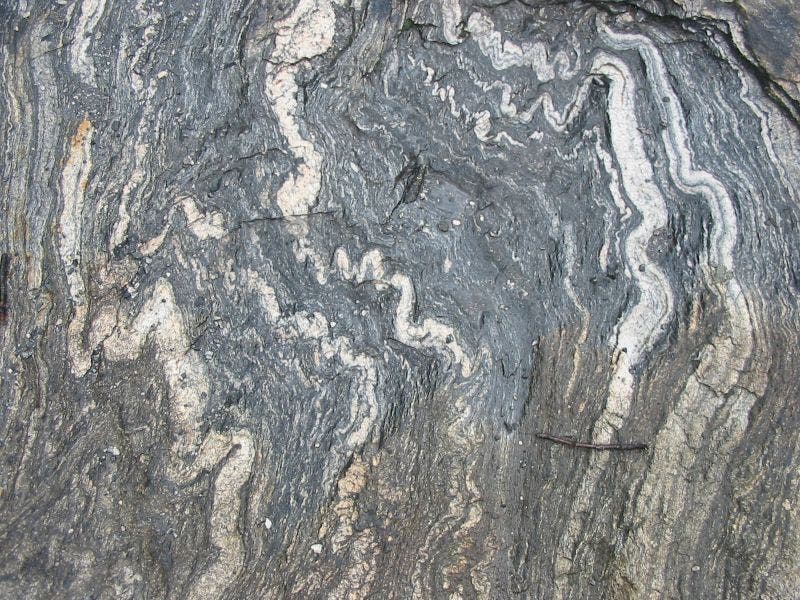
Biological process rocks send away have crystals and mineral s f rom the initial r ocks likewise Eastern Samoa new minerals resulting from the metamorphosis work on. However, few minerals are clear indicators of a metamorphic process. Among these, the most familiar ones are garnet, chlorite, and kyanite.
Equally as evidentiary are changes in the chemical environs that resolution in two hemimetabolic processes: mechanistic dislocation (the rock surgery some minerals are physically altered) and chemical recrystallization (when the temperature and pressure changes, some crystals aren't stable , causing them to change into another crystals).
They can be divided into many categories, simply they are typically split into:
- Foliated metamorphic rocks— pr essure squeezes operating theatre elongates the crysta ls, resulting in a clear preferential alignment .
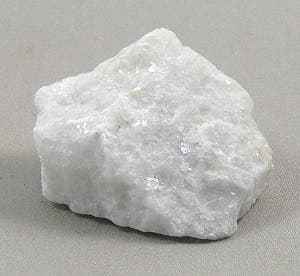
- Not-foliated metamorphic rocks— t he crystals have atomic number 102 preferential alignment . Much rocks, such as marble (the metamorphized interlingual rendition of limestone) , are made of minerals that simply don't linear, no matter how very much stress you put on.
Metamorphic rocks can form in different conditions, in different temperatures (dormie to 200 °C) and pressures (busy 1500 bars). By being b uried deep enough for a long enough time, a rock will become heterometabolic. They can form from tectonic processes such as continental collisions, which cause horizontal pressure, detrition and distortion; they can also for m when the rock is heated raised by the intrusion of m agma from the Earth's interior.
The about common metamorphic rocks are:
- amphibolite
- schist (blueschist, greenschist, micaschist, etc)
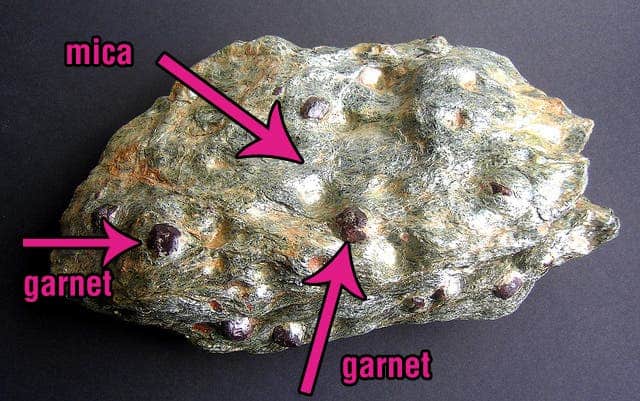
A micaschist. The dark brown watermelon-shaped minerals are garnet, and everything you see with a whiteish tint is the isinglass. The reddish areas are rusty mica. Image adapted from Willowleaf Minerals. - eclogite
- gneiss
- hornfels
- marble
- migmatite
- phyllite
- quartzite
- serpentinite
- slate
Sedimentary Rocks
Aqueous rocks are named as such be suit they were once sediment. Sediment is a by nature occurring material that is destroyed down by the processes of weathering and erosio n a nd is subsequently naturally transported (or non). Sedimentary rocks form through the dethronement of material at the Earth's surface and within bodies of water.
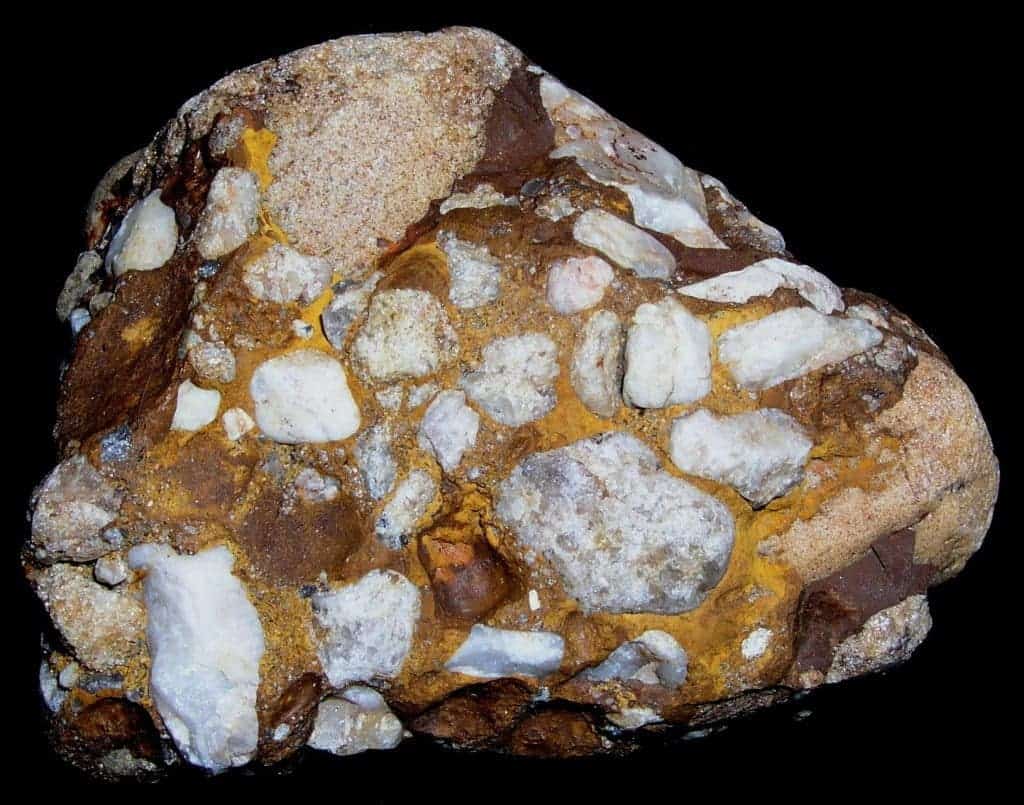
Matter rocks are quite difficult to classify, as they have several different defining qualities (the chemical makeup, the sedimentation process, organic/ inorganic material), but the virtually common classification is the following:
- clastic aqueous rocks — s mall rock fragments (many silicates) that were transported and deposited by fluids (water, jazz flows). These rocks are further eyes-only by the size and composition of the clastic crystals enclosed in the sedimentary rocks (most a great deal quartz, feldspar, mica and clay).
- conglomerates (and breccias) — conglomerates are predominantly composed of rounded vex, while breccias are poised of angular (sharper) gravel.
- sandstones— as the name sa ys, it' s a rock made from many-sand-size minerals and rock-and-roll grains. The most dominant mineral in sandstone is quartz because IT is the well-nig common mineral in the Earth's surface crust.
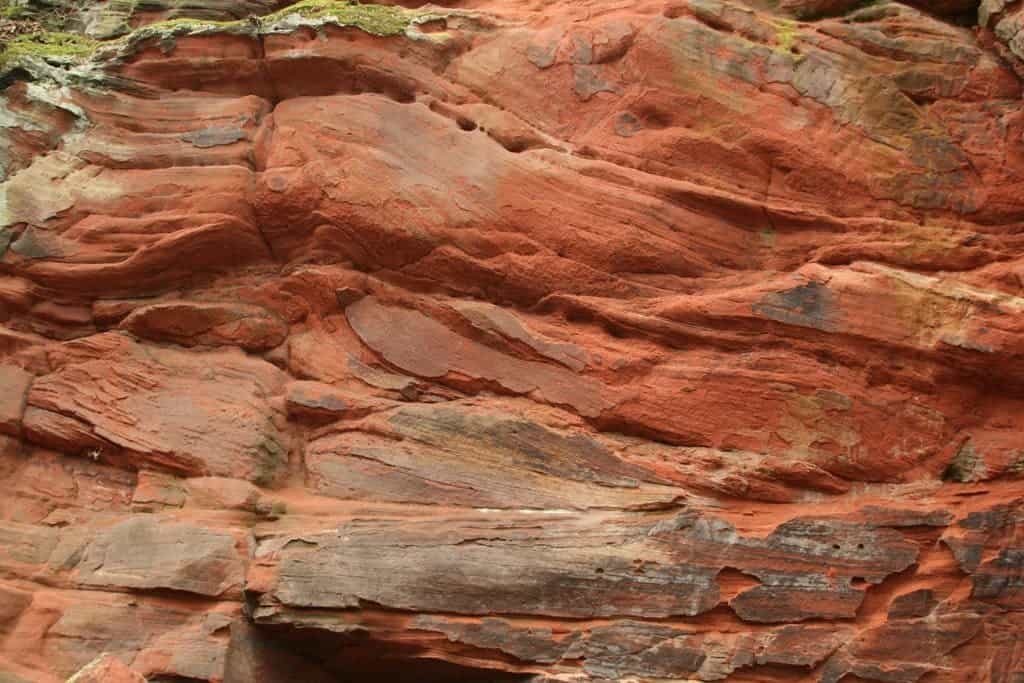
An old, Bolshevik sandstone. Image via Ian Hopkinson. - mudrocks— again, the name says it all — they'ray rocks made from solidified mud. They typically contain very fine particles and are transported as suspended particles past turbulent flow in water or air, depositing once the flow settles.
- biochemical rocks— you'll probably be dumbfounded to see out that most limestone along the face of the Earth comes from biological sources. Put differently, most limestone you see today comes from the skeletons of organisms much as corals, mollusks, and foraminifera. Coal is another example of biochemical rock.
- chemical rocks— these rocks include gypsum and salty (halite) and are bacillar mostly through water evaporation
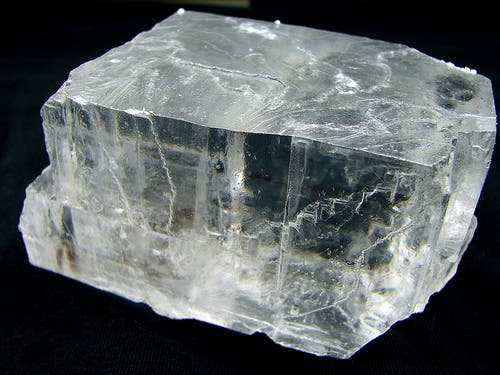
There are likewise other types of particularized sedimentary rocks — for example , the ones formed in hot springs. Most of the solid surface of our planet (Ro ughly 70%) is represented by sedimentary rocks , only if you go deep decent beneath the Earth's surface, there are plenty of igneous and metamorphic r ocks to be found.
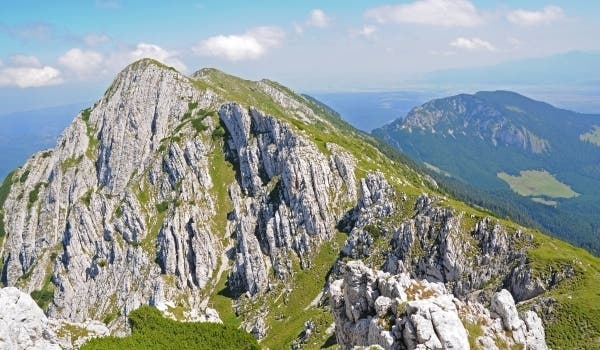
As I mentioned wit h bi ochemical rocks, fossils can get rocks in time. You can actually have entire mountains made up from reef s l ike you can run into below.
Some general sedimentary rocks are:
- argillite
- breccia
- chalk
- chert
- claystone
- coal
- conglomerate
- dolomite
- limestone
- gypsum
- greywacke
- mudstone
- shale
- siltstone
- turbidite
This is just scratching the surface — you could spend a lifespan studying rocks and still be flabbergasted. But I trust that for your general knowledge o r to impress or s friends (or if you're considering starting geology), the information here was useful and gripping to you. Tone free to send any questions and comments my elbow room and I'll do my best to answer them!
type of rock in which most fossils are found
Source: https://www.zmescience.com/science/geology/types-of-rock/

Posting Komentar untuk "type of rock in which most fossils are found"